Weekly Links: Ads for AI Agents, The Value of Harnesses, and AI Unbundling
Neuromancer is coming to Apple TV, Time starts serving Ads to AI and European code hosting says no to AI and tries to force Google to unbundle.
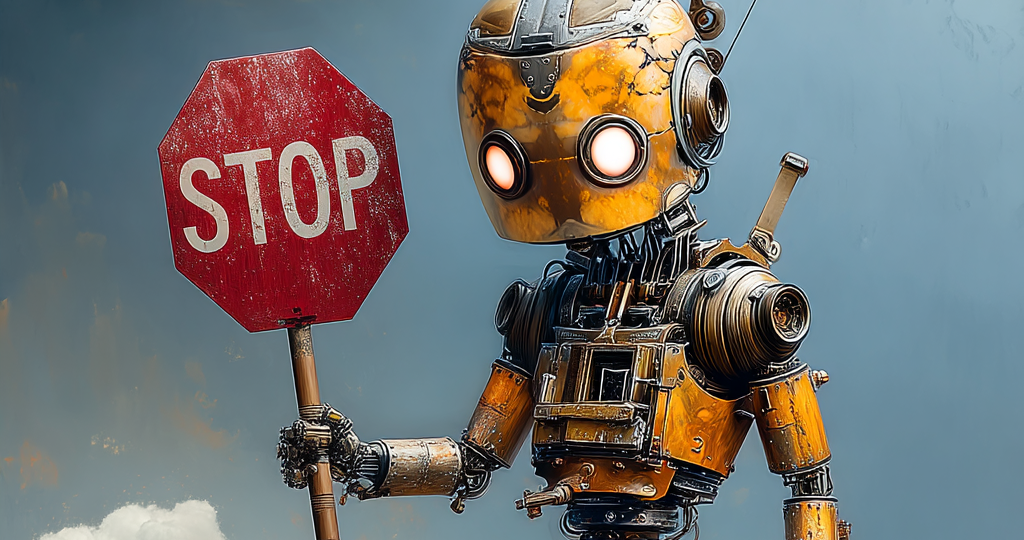
This week in AI: the singularity is upon us, more news that agents have run amok at Anthropic and OpenAI, and Google keeps pushing forward in areas like music.
On to the main stories:
- Time has started serving ads to AI agents. This seems quite wild, but also logical. AI bots are now a significant slice of the traffic on many content sites, and it isn't clear they result in more human traffic. Using the real estate to appeal to agents more (in terms of content) and serve up content that might influence them makes sense. How sustainable this is is hard to say. AI is likely to be able to filter out ad content much more easily than humans could; on the other hand, crawlers might welcome the information if it comes from trusted sources.
- The European "anti-GitHub" just said no to AI-generated code. Should we listen? Thoughtful analysis of the EU code hosting foundation Codeberg to ban AI contributions. There is clearly a resource issue in handling AI code contributions. The author asks a good question - is code always a positive economic good? In the long run, though, I cannot see this policy holding. Some of the most valuable code in the world will be 5% human-steered and 95% agent-authored. Some of that will hopefully be open source. It seems to me that perhaps the sustainability model for code hosting is what needs to change. It's laudable to want to host everything for free, but perhaps there needs to be some other bar to clear before free hosting is granted.
- GPT-5.5 Sets a New Code Security Record with Cursor, not Codex, in Agent Security League. This minor-sounding announcement is, in my view, potentially quite important. In essence, GPT-5.5's performance using Cursor as a harness was better than when using GPT-5.5's Code Harness for security tasks. If this turns out to be true across other tasks and with other harnesses, it seriously reverses a claim that frontier model makers have been making that harnesses and models need to co-evolve for best performance. This would be good news for competition but less good for frontier model makers, as it could weaken their control over the customer experience (why use Codex or Claude Code when you can use a generic harness that allows you to model-switch). Having said that, Cursor is not just any model harness: the company has expended a huge amount of effort to tune coding performance. OpenAI and Anthropic may be kicking themselves for not buying the company before X.AI did.
- Apple.TV releases a trailer for Neuromancer to be released in 2027. Ordinarily, this wouldn't be a main item, but I'm unreasonably excited about this, so to heck with it. It's hard to underline how foundational Neuromancer is as a linchpin to AI and Cyberspace. It even predicts data centers in space. Some of the comments are also funny: "Don't screw up Molly"; there will be an army of critical fans, so the makers have a hard job on their hands. If you have not read the book, though, I highly recommend it (and its sequels).
- Google for AI interoperability and sharing of Google Search. Two weeks ago, the European Commission issued a verdict on the current Google DMA violation case, which not only imposed an 890M Euro fine but also restated the need to unbundle Google services from the Android operating system. The objective is to allow third parties the same access to Android APIs as Google does. While I'd normally be in favor, this presents massive challenges (for both Google and Apple) since the APIs allow direct access to highly sensitive user data and the applications referenced include AI Services such as Gemini. The challenge is that in this combination, users could well be in the situation where untrusted or untested AI could access their entire digital lives. It seems unlikely that Apple would ever allow this, and Google will likely also fight this hard. I see three potential outcomes: Apple/Google do not ship strong AI for consumers in the EU at all, or they put in place access, but it will take years since safe APIs need to be designed (and these will slow down innovation for all), or perhaps there is another path where users have to jump through hoops to unlock app access. I can see the rationale behind this, but ... in truth, consumer electronics and digital services have a duty of care to their users. Forcing them to remove barriers creates all sorts of risks (that they are also liable for). It seems to me that it would be better to let the market sort this out. If there is a market for unlocked devices and OSs, then perhaps we should let players emerge in that market. (*)
Wishing you a happy Sunday!
(*) I'm aware that this is extremely hard due to network and scale effects, but ... the market can be creative.