Weekly Links: Robot Sprinters, Asimov's Laws, and Vibe Maintaining
H1 Unitree Unit sprints at human 100m speed, Asimov's laws still hold up to some extent, and Anthropic continues to make big moves.
A late post this week due to travel and a busy week last week. AI news this week included Tesla taking a first self-driving step in Europe, AWS adding its own Agent Registry, and Anthropic entering the agent-building game in earnest. Anthropic also amusingly briefly suspended OpenClaw creator Peter Steinberger's Claude access this week; they probably should be sending him revenue share cheques instead.
On to the main stories:
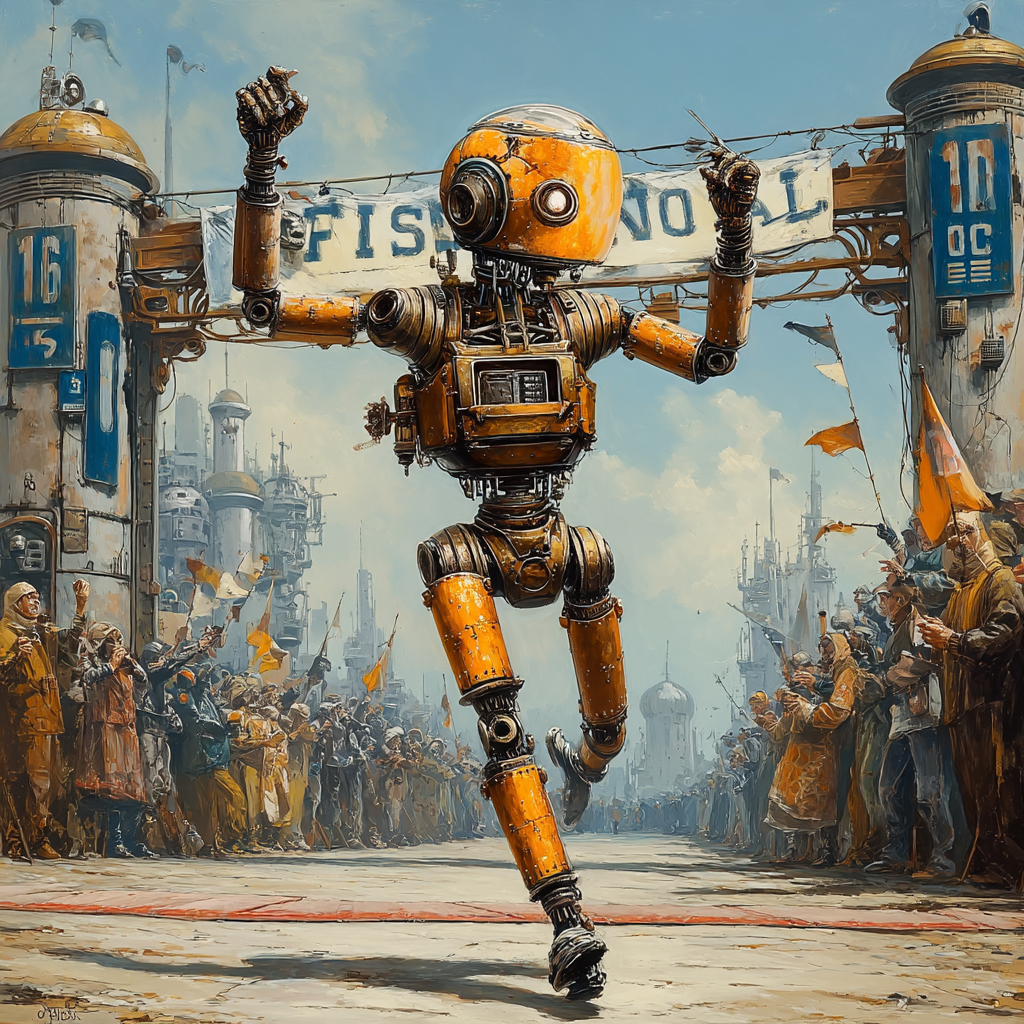
- Unitree H1 Humanoid Robot Breaks Limits at 22.4 MPH (YouTube video). This week, Unitree's H1 robot reached a claimed 22.4 MPH - about 10 meters per second. That makes it close to as fast as the top human 100m sprint specialists. Somehow, this feels like a significant milestone. One would have to assume it would already be able to break 200M and 400M records in this case, since endurance would likely be well beyond that of a human 100M sprinter. I guess we'll have to give up outrunning robots if the world ever starts to mimic a dystopian sci-fi story.
- Meta debuts the Muse Spark model in a ‘ground-up overhaul’ of its AI. Meta reboots its AI efforts with a new model that will now power its free online AI. In the release post, Meta included some impressive benchmark scores. The company is explicitly focusing on "personal" AI, including healthcare and agentic tasks. This sets up an interesting focus challenge for OpenAI in particular. In its race with Anthropic and Google, OpenAI is primarily competing for productivity applications. Now with Meta, it is very clearly going to be fighting for personal usage. Do the two reinforce each other or pull in opposite directions? My guess is that they overlap enough that having a single AI service that handles both probably makes sense for most people in the long run. The race to be the personal agent of choice is definitely on.
- Anthropic’s Claude Mythos is now available, but not for you. Possibly the biggest story of the past two weeks is Anthropic's release of its new Mythos model to select organizations only. They characterize the new model as so good at finding security vulnerabilities in existing code that they argue security organizations in large companies need to be the first to get access to it. Part of this may be excellent marketing; however, we are definitely entering an era where almost all existing software will be attacked in depth with new AI tools. There is no doubt that many security vulnerabilities still await discovery. We can expect regular data breaches over the next few years. The only real way around it is indeed for companies to proactively "self-scan". It's not obvious, though, that it makes sense for just one company to be doing it. Surely it would make sense to create some kind of trust network to allow more people to use the models (and burn tokens in the name of security).
- Asimov’s three laws of robotics survived 82 years, we broke them in 30 minutes, costs 80 cents, and then remade them. My favorite post of the week from the folks at Adafruit (great place to get electronics components). It was the first time I'd heard of loophole which is an adversarial simulator for stress testing legal systems. The test they ran was on Asimov's three (four) fundamental laws of robotics. Turns out you need a lot of caveats and patches to make them viable. Still, I'm rather surprised how well they hold up after 82 years. Maybe we just need to take a really simple approach to some things.
- Vibe Maintainer. Steve Yegge is known for outspoken opinions on APIs and other topics while at Amazon, and now he is known for Gas Town, which is an extensive agent-based software production system. His latest post pushes another boundary: maintaining a (now massive) open-source project that receives 50-plus pull requests (contributions) per day, of which 99% are AI-generated. Most open source projects ban AI-generated work or at least restrict it. This is understandable, but Yegge argues that it is the wrong approach. From his point of view, if the contributions are good, you will gain huge velocity from AI contributions; you just need a way to deal with the submissions. Enter "Vibe Maintaining". As much as it causes problems, I believe Yegge is right: projects that accept AI contributions and figure out how to handle them will thrive, and those that don't may wither. The logic is clear even on token cost alone: having a contributor burn the tokens for the code they wish added is way better than burning the tokens yourself. Clearly, this provokes some serious soul-searching. Must the nature of open source change? What about highly sensitive systems? What about malicious attacks?
Wishing you all a great week.